
I spent an ungodly amount of time this weekend trying to figure out whether I was a Deep Autumn or Deep Winter¹. I enjoy thinking about fashion. What looks good on me? More importantly, what feels good to wear? Especially on the days when I know I’ll be in front of a group of strangers for hours.
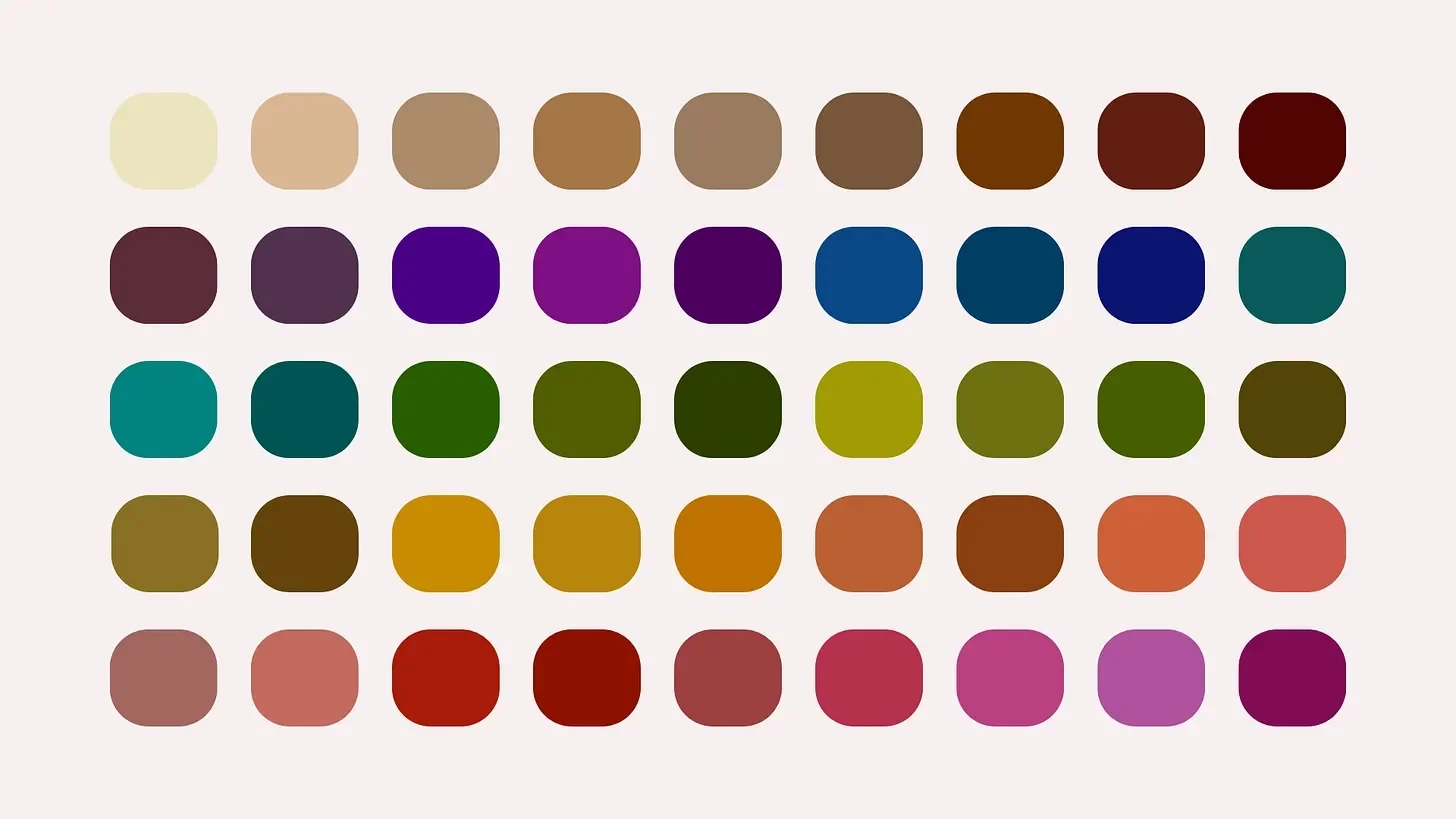
via Soul of Color
There are all kinds of frameworks for figuring out your personal style2, but I’ve yet to come across anything to help me define my facilitation style.
Like many facilitators, my facilitation style wasn’t intentional at first. I started out by doing what I thought I was supposed to do, which was being the loudest, bubbliest person in the room.
For the readers who don’t know me personally, am not loud. In fact, I had to go to speech language therapy a couple of years ago to work on projecting. And though I am warm, I wouldn’t describe myself as bubbly.
The more I facilitated, the clearer I got on what was sustainable for me in the day-to-day and what people appreciated about the way I facilitated. I heard clients across sessions use words like grounding, relatable, and practical to describe their experience with me. At Women Facilitating, we believe that dot connecting is part of a facilitator’s job description, and I connected the dots of personal and participant feedback into a more intentional expression of my facilitation style.
Shopping…and picking outfits…and feeling confident in said outfits is simpler when you know your sense of style. Similarly, it’s easier to show up as a facilitator when you’re secure in your facilitation style. I’m channeling my inner Stacy London to offer three tips for defining and refining your facilitation style.
Choose your three words
Allison Bornstein took TikTok by storm when she invited us all to define our style in three words. In Allison’s method, you pick a realistic word, an aspirational word, and an emotional word. Surprisingly, it works just as well for facilitation styles.
Your realistic word is how you currently show up as a facilitator. It’s probably hidden in plain sight. Look through your agendas, participant feedback forms, and journal entries, noticing which themes arise.
Starter words: intentional, energetic, warm
Your aspirational word is how you want to show up as a facilitator. Think about the facilitators you admire. Then, think back to the moments when you felt at your best as a facilitator. What do those people and your most confident moments have in common? Your aspirational word is about unlocking a fuller expression of your facilitation style, not trying to mimic someone else’s.
Starter words: present, assertive, adaptable
Your emotional word is how you want you and/or your participants to feel when you’re facilitating. We all know the Maya Angelou quote. At the end of the session, people will walk away with an emotional imprint from you. What feeling do you want to leave participants with?
Starter words: connected, self-aware, equipped
Think of this as a reflective exercise rather than a branding exercise. Noodling on your three words gives you a better understanding of who you are as a facilitator and who you want to become. You don’t need to update your LinkedIn profile. Oh, and your three words are allowed to change, by the way. Trust your facilitator instincts and adapt as new insights emerge.
Learn to flex
Your facilitation style can and should look different across contexts. Once you’ve decided on your words, think about the spectrum of how you can express them. Going back to our fashion analogy, it’s like dressing up or dressing down a little black dress.
Say one of my words is relatable. Relatable in a room of mid-career women looks different from in a classroom of high school freshmen³. I would draw from different methodologies, anecdotes, identities, and activities to relate to each group. You’re not changing your style entirely. You’re just considering how your style can best support the session’s purpose and participants.
Think about contrast and complements
There is only so much flexing one facilitator can reasonably do. That’s why co-facilitation is such a gift. Knowing your facilitation style makes it easier for you to identify co-facilitator relationships where you can balance and build upon each other’s genius. As someone with grounding energy, I love working with effervescent folks. You might seek out someone whose attention to detail can round out your flowyness.
Participants benefit from the diversity of facilitation styles, but I’d be lying if I said that partnering across different facilitation styles is a breeze. In my experience, the better you can articulate your facilitation style, your strengths, and your struggles, the smoother the co-facilitation process becomes.
If you’ll grant me one last apparel parallel⁴, being a facilitator can be a cobbler’s kid situation. We’re so focused on repairing everyone else’s shoes that we neglect the ones closest to home.
Here’s my challenge to you: somewhere between all your session prep, deliveries, and stakeholder meetings, block off some time to reflect on your facilitation style. You deserve time for professional development, too.
When you’re done, come back to share your words and insights in the comments!
Women Facilitating helps women own rooms and drive conversations that matter.
1 - The jury’s still out, by the way. Maybe I’m just Deep?
2 - Did anyone else receive their initial fashion education via makeover shows in the early aughts?
3 - Ask me how I know 🙃
4 - And a rhyme scheme, I guess?